Navigating the Magical Landscape: A Comprehensive Comparison of Open-World RPGs Like Harry Potter Games
When Hogwarts Legacy launched, it cast a powerful spell on players, inviting them into a meticulously crafted open-world experience steeped in the lore of the wizarding world. For many, it delivered on a long-held fantasy: attending Hogwarts, mastering spells, and uncovering ancient secrets. Yet, in the vast realm of gaming, how does this adventure truly stack up against its peers? This guide dives deep into a Comparison with Similar Open-World RPGs & Harry Potter Games, helping you understand where Hogwarts Legacy shines, where others excel, and what your next magical (or equally epic) journey might be.
Whether you're looking for a game with equally satisfying spellcasting, expansive exploration, or rich narrative choices, we'll break down the contenders.
At a Glance: Key Takeaways for Your Next Adventure
- Hogwarts Legacy delivers: A vast, lore-rich open world with a satisfying magic-based combat system and deep exploration.
- If you love magic combat: Look to games like Dragon Age: Inquisition, Elden Ring, Forspoken, or Immortals Of Aveum for varied and powerful spellcasting.
- For deep RPG mechanics & tactical magic: Baldur's Gate 3 and Divinity: Original Sin 2 offer unparalleled strategic depth and wizardry.
- Seeking immersive open worlds & narratives (even without magic): Ghost Of Tsushima, Assassin's Creed: Valhalla, and Star Wars Jedi: Survivor excel in rich storytelling and exploration.
- The older Harry Potter games: Offer direct nostalgia but often fall short on modern open-world and RPG expectations.
- VR enthusiasts: Blade And Sorcery provides a uniquely immersive magic combat experience.
Hogwarts Legacy: The Foundation of Our Comparison
Let's quickly set the stage with Hogwarts Legacy itself. Released in 2022 (after a 2021 target), this RPG plunges you into the late 1800s as a fifth-year student at Hogwarts. Your mission? To uncover a sinister conspiracy threatening the wizarding world.
The game thrives on core pillars:
- House Choice & Identity: You pick your Hogwarts House, influencing aspects of your journey.
- Iconic Locations: Explore popular, beautifully rendered wizarding world locations.
- Vast Open World: A sprawling environment ripe for exploration, from Hogsmeade to the Forbidden Forest.
- Magic-Based Combat: Engage in dynamic spell duels, customize your magical abilities, and master a wide array of offensive, defensive, and utility spells.
- RPG Progression: Grow your character, learn new skills, and craft potions.
It's a strong package, but to truly understand its standing, we need to compare it with other giants and niche gems in the open-world RPG space. The big question for many isn't just "is it good?", but "what else out there captures a similar feeling, or improves upon specific aspects?" If you're pondering whether this wizarding adventure is right for you, a deeper dive into whether it’s worth your time might be useful. is Hogwarts Legacy worth it.
When Magic is Your Weapon: RPGs Where Spells Reign Supreme
Hogwarts Legacy's combat is undeniably one of its strongest selling points. The ability to chain spells, parry attacks, and strategically use environmental magic creates a dynamic flow that's deeply satisfying. But it's far from the only game where magic feels powerful and central to the experience.
Dragon Age: Inquisition: Demanding & Rewarding Spellcraft
BioWare's epic fantasy RPG, Dragon Age: Inquisition, offers a world bursting with wizardly possibilities. Casting magic here isn't just a button press; it's a demanding, active part of gameplay that makes playing a mage character incredibly viable and enjoyable.
Unlike Hogwarts Legacy's more fluid, action-oriented spellcasting, Inquisition often requires strategic positioning and managing mana. However, the sheer variety and power of its spells—from elemental blasts to crowd control—make mages formidable. You even get to choose from three distinct mage specializations: the Knight-Enchanter who weaves magic into close combat, the Necromancer who raises the dead, or the Rift Mage who manipulates the environment. This depth of choice and the tactical satisfaction of a well-placed spell resonates with the strategic element of Hogwarts Legacy's combat. To explore more about how these two magical worlds clash, consider reading Dragon Age: Inquisition vs. Hogwarts Legacy.
Tales Of Arise: Flashy Combat & Diverse Spellcasters
Tales Of Arise is another expansive RPG that lets players tailor their combat preferences. If you loved slinging spells in Hogwarts Legacy, you'll likely gravitate towards characters like Rinwell in Tales of Arise. She’s a dedicated spellcaster, dishing out mid-range and long-range damage with a diverse array of spells, including both Area-of-Effect (AOE) and single-target attacks that can be chained together (subject to cooldowns).
While its anime aesthetic and real-time action combat system differ from Hogwarts Legacy's flow, the satisfaction of chaining powerful magical attacks is a shared experience. It provides that same "magical fantasy" fulfillment, just with a different flavor. For fans who appreciate varied combat styles and visually impressive spell effects, Tales of Arise offers a robust alternative. Dive deeper into their comparison with Tales of Arise vs. Hogwarts Legacy.
Immortals Of Aveum: Pure Magical Warfare
If Hogwarts Legacy gave you a taste for being a powerful battle mage, Immortals Of Aveum serves up a full course. This game is entirely centered on magic, with players wielding an arsenal of colorful, potent spells against hordes of enemies. It streamlines the RPG elements to focus almost exclusively on high-octane, magic-based combat.
While it lacks the sprawling open-world exploration and social simulation of Hogwarts, Immortals Of Aveum delivers on the fantasy of being an unstoppable mage in battle, with a variety of spell types to master and unleash.
Elden Ring: Brutal Power & Strategic Spellcasting
FromSoftware's Elden Ring might seem like an odd comparison initially, given its notoriously challenging Soulsborne roots. However, for those who value powerful and effective spellcasting in an open world, Elden Ring offers an incredibly deep magic system. Sorceries provide brutal offensive power, unleashing devastating projectiles and area spells, while Incantations offer a balance of offense and defense, including healing and wide-area effects.
Magic in Elden Ring is less about chaining light attacks and more about strategic timing and resource management, but the sheer impact and visual spectacle of high-level spells rival anything in Hogwarts Legacy. Its vast open world, packed with secrets and challenging encounters, also invites the same sense of discovery. If you're seeking a darker, more challenging take on open-world exploration paired with formidable spellcasting, Elden Ring is a strong contender. See how these two titans stack up in Elden Ring vs. Hogwarts Legacy.
Forspoken: Flashy Elemental Magic & Magical Parkour
Forspoken is an isekai RPG that, despite a somewhat challenging early combat experience, truly embraces magical combat and traversal. Frey's spell repertoire expands significantly throughout the game, allowing players to engage in flashy, elemental spells that feel incredibly satisfying. The game also features "magical parkour," an excellent traversal system that makes navigating its beautiful (if sometimes empty) landscapes a joy.
While its narrative received mixed reviews, the core loop of exploring, fighting with diverse elemental magic, and fluidly moving through the environment shares a similar fantastical appeal to Hogwarts Legacy. If you appreciated the quick movement and varied spells in Hogwarts, Forspoken might offer a different, but equally engaging, magical fantasy. Unpack the full comparison with Forspoken vs. Hogwarts Legacy.
Elder Scrolls Online: An Enduring MMORPG of Magic and Lore
If you loved Hogwarts Legacy's in-depth world-building and the satisfaction of customizing your magic, Elder Scrolls Online (ESO) provides an expansive, long-running MMORPG experience. Released in 2014 and still receiving continuous updates, ESO offers an in-depth world rich in lore, fantasy, and, of course, spells.
Players engage in combat using a range of magical abilities, strategically allocating skill points, and even leveraging an alchemy system for potion making to fully customize their Mage playstyle. The scale of its world and the sheer volume of content dwarfs Hogwarts Legacy, providing a near-endless well of exploration and magical combat for those who enjoy online multiplayer environments.
GreedFall: Colonial-Era Magic & Tactical Choices
GreedFall offers a unique setting: a fictional 17th-century Europe undergoing colonization. In this action RPG, players can choose a mage class and strategically use skills and mana to cast spells. Your decisions influence your journey, creating a narrative depth that resonates with the choices you make in Hogwarts Legacy.
The combat isn't as fast-paced as Hogwarts Legacy, but the tactical satisfaction of managing your spells and resources to overcome challenges is present. It’s an intriguing blend of historical fantasy with a strong magical element.
Dragon's Dogma & Dragon's Dogma 2: Epic Encounters & Unique Spellcasting
Both Dragon's Dogma (the original) and its sequel, Dragon's Dogma 2, offer adventure-filled fantasy action RPGs known for their unique Pawn system and epic monster encounters. Players are equipped with spells and abilities, with the original featuring three hybrid mage classes: Magic Archer, Mystic Knight, and Sorcerer. Dragon's Dogma 2 continues this tradition with a big open world that rewards exploration and deep, well-written questlines.
While their realistic combat system is less akin to Hogwarts Legacy's pure mage combat, the variety of spells for tackling missions and defeating giants is impressive. The slower, more deliberate pacing of Dragon's Dogma 2 encourages thorough exploration, a trait shared with Hogwarts Legacy's expansive world. For those interested in the evolution of this series, comparing the original's magical combat with Hogwarts Legacy's flow can be insightful Dragon’s Dogma vs. Hogwarts Legacy, and similarly for the sequel Dragon's Dogma 2 vs. Hogwarts Legacy.
Dark Messiah Of Might And Magic: Blending Stealth, Magic, and Action
Developed by Arkane Studios, Dark Messiah Of Might And Magic is a single-player action game that skillfully blends stealth, magic, and action. While direct melee is often emphasized, skilled players can unlock and utilize powerful magical spells.
It's a more linear experience than Hogwarts Legacy's open world, but the satisfying way magic interacts with the environment and complements other combat styles might appeal to those who enjoyed the strategic aspects of spell use in Hogwarts.
Strategic Spellcraft & Deep RPG Systems: The CRPG Connection
While Hogwarts Legacy is an action RPG, its emphasis on character progression, choice, and world interaction shares DNA with the classic Computer Role-Playing Game (CRPG) genre. These games take magic to a whole new level of tactical depth.
Baldur's Gate 3: Unrivaled Wizardry & Tactical Depth
Baldur's Gate 3 is a critically acclaimed CRPG that truly allows players to embrace a witch or wizard playstyle with unparalleled depth. Magic isn't just a tool; it's a powerful, versatile system that can turn the tide of tactical combat encounters. Its available classes, like Wizards, Sorcerers, Warlocks, and Druids, offer distinct magical approaches, spell lists, and lore.
The combat is turn-based and highly tactical, a stark contrast to Hogwarts Legacy's real-time action. However, the sheer breadth of spells, their environmental interactions, and the narrative impact of your magical choices provide a profound sense of power and agency that any aspiring wizard would appreciate. For a direct comparison of their magical prowess and RPG systems, delve into Baldur's Gate 3 vs. Hogwarts Legacy.
Divinity: Original Sin 2: Environmental Magic Mastery
Another masterful CRPG, Divinity: Original Sin 2, expands on its predecessor with a branching narrative and improved gameplay. Magic here is absolutely crucial, allowing players to exploit environments with various elements—think setting oil slicks on fire or electrifying puddons—to deplete enemies' Magical Armor and apply devastating status effects.
Like Baldur's Gate 3, its turn-based combat and isometric perspective are a departure from Hogwarts Legacy. Yet, the creative application of magic, the freedom to approach challenges with spells, and the deep narrative choices make it a rich experience for players who enjoy strategic wizardry and impactful decision-making. Explore their differences in depth with Divinity: Original Sin 2 vs. Hogwarts Legacy.
Beyond the Spells: Open Worlds, Rich Stories, and Hard Choices
Hogwarts Legacy isn't just about magic; it's about exploring a familiar world, uncovering a compelling narrative, and making choices that shape your journey. Several other open-world RPGs excel in these areas, even if their combat systems diverge significantly.
Assassin's Creed: Valhalla: Expansive Discovery & Immersive Worlds
While devoid of magic, Assassin's Creed: Valhalla offers a visually stunning, vast open world brimming with challenging puzzles, interesting shops, and diverse NPCs. These elements combine to create an immersive experience and expansive discovery similar to the sense of wonder you get exploring the Scottish Highlands and Hogwarts grounds.
The focus here is on Viking-era combat, exploration, and settlement building, rather than spellcasting. However, if your primary draw to Hogwarts Legacy was the thrill of uncovering every secret in a richly detailed world and interacting with a diverse cast of side characters, Valhalla delivers on that front with hundreds of hours of content. Understand the nuances of their open-world design with Assassin's Creed Valhalla vs. Hogwarts Legacy.
Fable III: Moral Choices & Magic Beyond Combat
Fable III, an open-world RPG set in medieval times, distinguishes itself by extending spells and magic beyond just combat, influencing a moral system that impacts your character and the world around you. It offers different schools of magic (Strength, Skill, Will) that cater to varied playstyles, including both offensive and healing spells.
What it shares with Hogwarts Legacy is a sense of a living, breathing world where your actions have consequences, and magic is intertwined with your identity and purpose. The open world is charming and full of character, inviting exploration and unique encounters, even if its combat and world scale are smaller than modern epic RPGs. For a deeper look into their shared RPG elements, check out Fable III vs. Hogwarts Legacy.
Ghost Of Tsushima: Epic Journeys & Immersive Exploration
Ghost Of Tsushima is a brilliant action-adventure game with a strong emphasis on open-world exploration. While it's a samurai epic rather than a magic-infused fantasy, it mirrors Hogwarts Legacy's rich narratives, epic journeys, impactful choices, and immersive exploration within vast, meticulously crafted environments.
The game's beautiful world, compelling story, and satisfying combat (though sword-based) provide a sense of grand adventure and discovery that will resonate with players who cherished the exploration and storytelling in Hogwarts Legacy. If you're looking for another stunning open world to get lost in, Ghost of Tsushima is a masterpiece. Explore the parallels between their worlds and stories in Ghost of Tsushima vs. Hogwarts Legacy.
Star Wars Jedi: Survivor: Lore-Rich Worlds & Challenging Exploration
An action-adventure set in the iconic Star Wars universe, Star Wars Jedi: Survivor offers a rich, lore-driven experience that shares much common ground with Hogwarts Legacy. It excels in its detailed narrative, intricate lore, open-world setting, and compelling exploratory aspects.
Players navigate challenges and puzzles that blend storytelling with exploration, much like uncovering the secrets of Hogwarts and the surrounding Highlands. While its "magic" comes in the form of the Force and lightsaber combat, the core appeal of being a powerful individual in a beloved universe, unraveling mysteries, and navigating complex environments is a strong parallel. Discover how these two adventure epics compare in Star Wars Jedi: Survivor vs. Hogwarts Legacy.
The OG Magic: Past Harry Potter Games
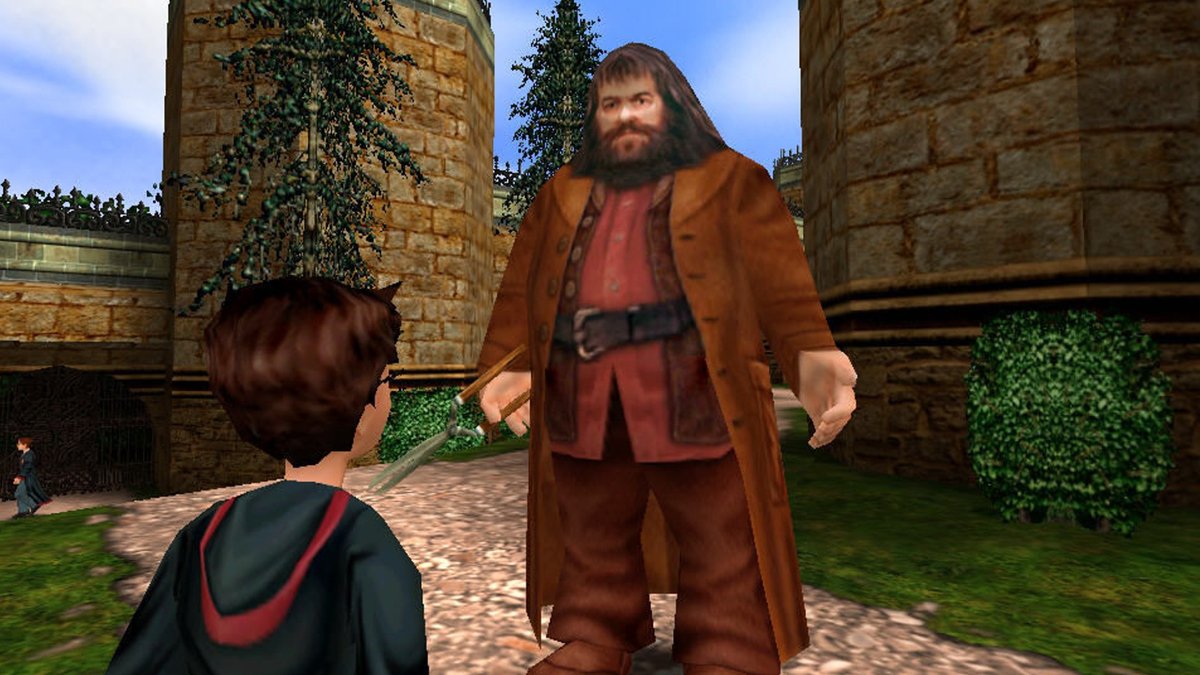
Before Hogwarts Legacy, a long line of Harry Potter games attempted to capture the magic. They serve as a direct point of comparison, highlighting how much the genre and technology have evolved.
Harry Potter & The Half-Blood Prince (2009): A Nostalgic Glimpse
The 2009 title, Harry Potter & The Half-Blood Prince, delivers a storyline faithful to the Harry Potter franchise. Its gameplay includes exploration (though far more constrained than Hogwarts Legacy's open world), puzzles, combat, and potion-making. It offers a direct Harry Potter experience, letting you walk the halls of Hogwarts from a different era of gaming.
However, it was noted for being short and repetitive, especially compared to modern open-world RPGs. While it offers a dose of pure Potter nostalgia, it underscores just how much Hogwarts Legacy advanced the concept of a truly open and dynamic wizarding world. It's a fun revisit for the lore, but don't expect the same depth of gameplay.
A Unique Perspective: VR Magic
Blade And Sorcery: Immersive Haptic Magic
For those who desire the ultimate immersion in magic combat, Blade And Sorcery delivers. This VR combat game is acclaimed for its immersive and engaging combat system, with its magic system being highly regarded. Players can incinerate, shock, and telekinetically manipulate foes with numerous spells, all within a physics-driven environment.
While it lacks the narrative and open-world scope of Hogwarts Legacy, it provides an unparalleled haptic and visual experience of truly wielding magic. It even supports mods for personalization, allowing players to expand their magical repertoire further. If the feel of casting spells was your favorite part of Hogwarts Legacy, and you own a VR headset, this is a must-try.
Choosing Your Next Adventure: What to Consider
Deciding which game to play after (or instead of) Hogwarts Legacy depends entirely on what aspects you enjoyed most.
- If you crave more dynamic spellcasting:
- Dragon Age: Inquisition for tactical, class-based magic.
- Elden Ring for powerful, impactful sorceries and incantations in a challenging world.
- Forspoken for flashy, elemental combat and magical movement.
- Immortals Of Aveum for pure, action-packed magic warfare.
- Tales Of Arise for satisfying, chained spell combos.
- Blade And Sorcery for unparalleled VR immersion in spellcasting.
- If you seek deep RPG systems and meaningful choices (especially with magic):
- Baldur's Gate 3 for tactical turn-based combat, robust character building, and narrative impact.
- Divinity: Original Sin 2 for environmental spell interactions and strategic depth.
- Elder Scrolls Online for a vast, enduring online world with deep character customization.
- GreedFall for a unique setting with impactful decisions and mage class options.
- Fable III for a charming open world where magic influences morality.
- If expansive open-world exploration and rich narrative are paramount (even without traditional magic):
- Ghost Of Tsushima for a breathtaking world and an emotional samurai epic.
- Star Wars Jedi: Survivor for a lore-rich universe, challenging exploration, and Force-based "magic."
- Assassin's Creed: Valhalla for a massive world to explore, packed with historical detail and discovery.
- Dragon’s Dogma 2 for a slower, more deliberate open world rewarding exploration and deep quests (with strong spell options).
- If pure Harry Potter nostalgia is your goal, with tempered expectations for modern gameplay:
- Harry Potter & The Half-Blood Prince offers a direct, albeit shorter and simpler, trip down memory lane.
Hogwarts Legacy carved out a unique space, offering a modern open-world RPG experience within a beloved fictional universe. Yet, as you've seen, the gaming landscape is rich with alternatives that can fulfill similar desires, whether it's the thrill of casting potent spells, the joy of boundless exploration, or the satisfaction of a deep, player-driven narrative. The wizarding world awaits your return, but don't be afraid to venture beyond its enchanting gates into other realms of adventure.